MAJOR ‘CONSUME ME’ SPOILERS AHEAD
I rarely see any positive portrayal of real-world religion in video games, and that’s fine. Before playing Consume Me, I had heard about the surprise Christianity towards the end that helps the protagonist cope with the overwhelming pressures of life as a teenager.
I had also guessed what the Steam reviews might say about this. Since I knew it was coming, I didn’t expect my own negative reaction to just how much screen time it gets in the game. Bent by the strain of maintaining her romantic relationship, her grades, her diet, and adjusting to college, Jenny shuffles into a church. What happens next is a pretty long sermon where a pastor says, in so many words: “You don’t have to be perfect to be worthy of love…”. Because this is a sermon, the implied second half of that sentence is “from Jesus Christ our Lord and Savior blessed be His name”. The more secular and, I would say accurate end of that sentence is…a period. It’s over there. You’re just worthy of love. But our girl Jenny gets the sermon version and runs with it. Who can blame her!? I’m making her chug 3 energy drinks every night just so she can stay up to cram for her Bio exam. I’m also not very good at the eating minigame, so she has to do aerobics in her room until she hits some arbitrary calorie deficit.

After finding blonde, blue-eyed Jesus, you get a new activity: prayer. Prayer is kind of OP because it takes zero time, clears a mental block that allows you to keep studying, and improves some other stats. In my playthrough I couldn’t see any way around using it. There are other ways to remove mental blocks, but they take more time and money.
This is very clever and also infuriating if you are not down with JC like that. I think the negative Steam reviewers are fair to point out that they do not like being railroaded into Christianity. But beyond the prayer mechanic, you don’t really see anything religious happening in the game after the big scene in the church. That is, until Jenny mentions going to youth group. It’s very brief, but she’s talking to a friend who asks her about it and she says that they were great until she started making choices they didn’t agree with.
By the time this happens, Jenny has already found some stability and community in game development. But of course there’s the road not taken that players might be anticipating. The one where the protagonist changes herself to keep being accepted by the group, then realizes that she doesn’t like the person she’s become. You want to tell her it’s a trap but she’s in your Steam Deck and she can’t hear you.
I started going to church as a kid because it was the only halfway decent daycare my parents could find. They didn’t go to church themselves, they just needed somewhere to put me while they both worked full time jobs. I loved it. The lunches were brought in from fast food restaurants, and the old sanctuary had been converted into a child’s idea of Heaven. There was pool, ping-pong, foosball, all the latest game consoles, and a giant projection screen where we watched only secular movies for some reason I did not question.
It felt like people at church were nicer to me than the ones at school because they had to be. That was great at first, but teenagers are bad at doing what they’re told, and the cracks showed pretty quickly. It hurt at the time but I realized later that having a handful of real friends who genuinely like you is a lot better than a congregation of people who just clocked in at the fellowship factory. Jenny finds church through an acquaintance that seems to have it all together, and they tell her it’s because of God. But even in that conversation, the writing gives away their underlying, unaddressed misery.
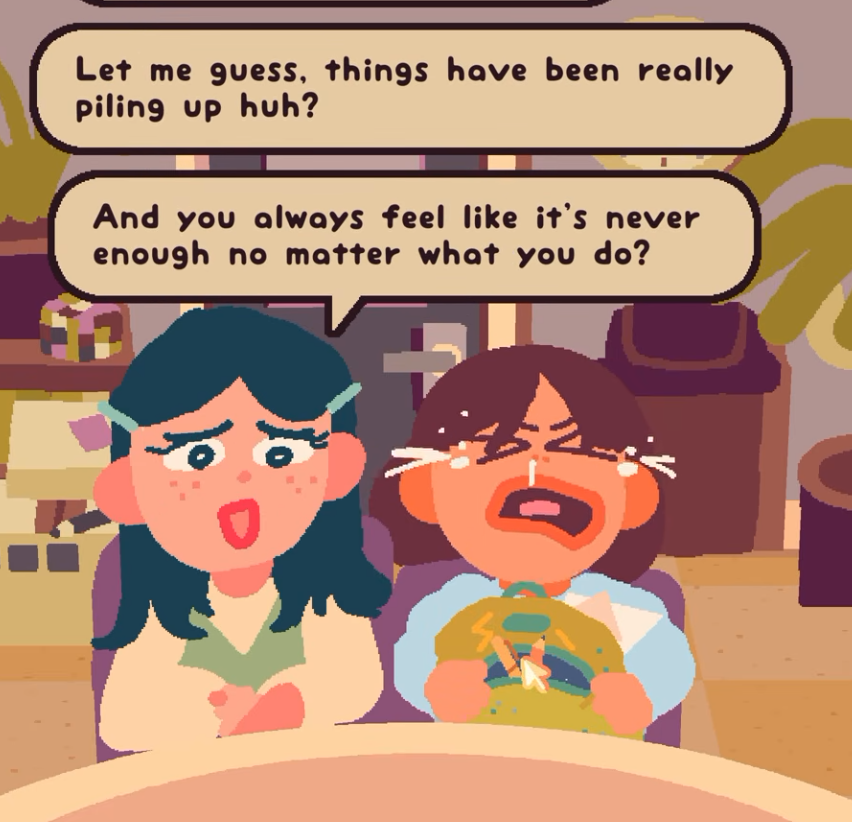
Credit: @fgw on YouTube
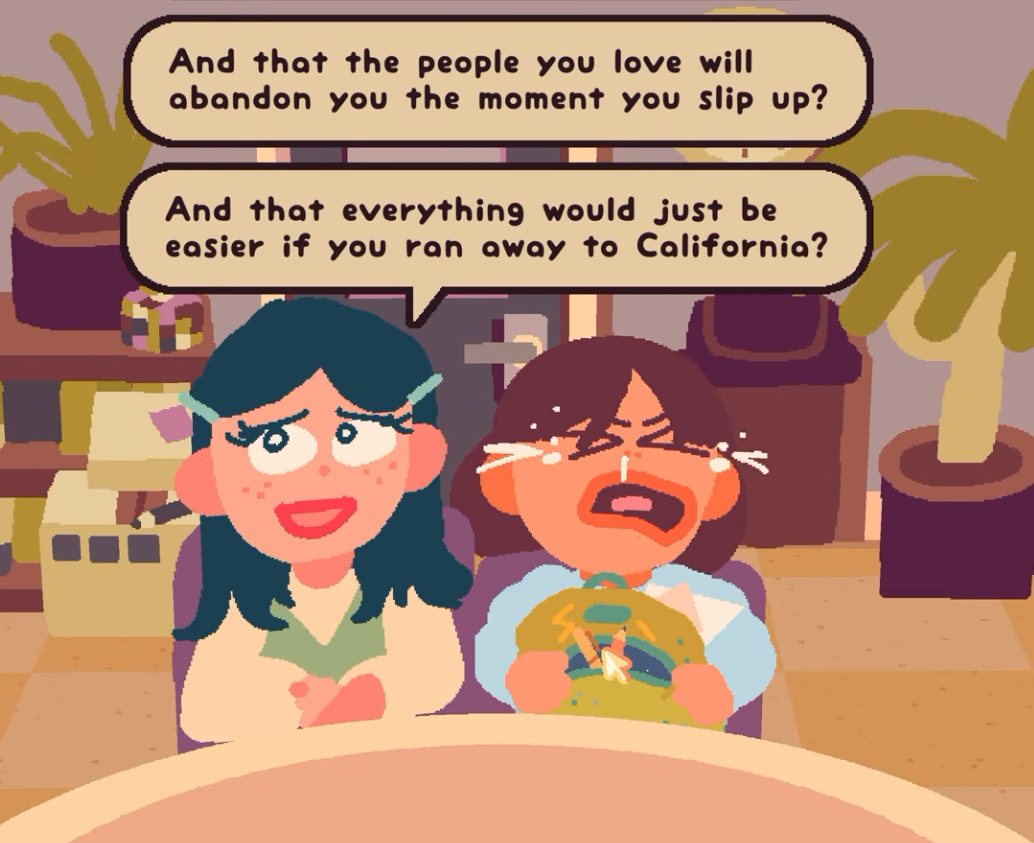
Credit: @fgw on YouTube
What struck me most is that even after Jenny finds religion, she’s more alone than ever. Of course some of her socializing could be happening off-screen but you are spending almost all of her free time alone in her room. Even the person that was supposed to accompany her to church cancels last minute. The basic promise of community that religion provides starts out rocky and falls apart completely when her youth group “friends” start judging her choices.

Credit: @fgw on YouTube
I understand feeling a little betrayed by a perfectly secular video game experience. You probably expect that a wholehearted endorsement of religion is not far behind when it buries the Jesus reveal in the back quarter. If the game was going to portray immense religious trauma, you realize, it would have started earlier. What you get instead is the “land of contrasts” version of religion. It helped for a little while to text Jesus (that is literally how you pray in Consume Me), but his other followers left you cold. Maybe that’s less narratively satisfying, but it feels like a real experience someone had. It’s certainly closer to mine.
But don’t take my word for it. If you’re still not sure where the developer stands, you need only look to the Mature Content Description of this game on Steam:
“Also Jesus shows up later in the game, but don’t worry! He doesn’t do anything.”